We are becoming an Affirming Church

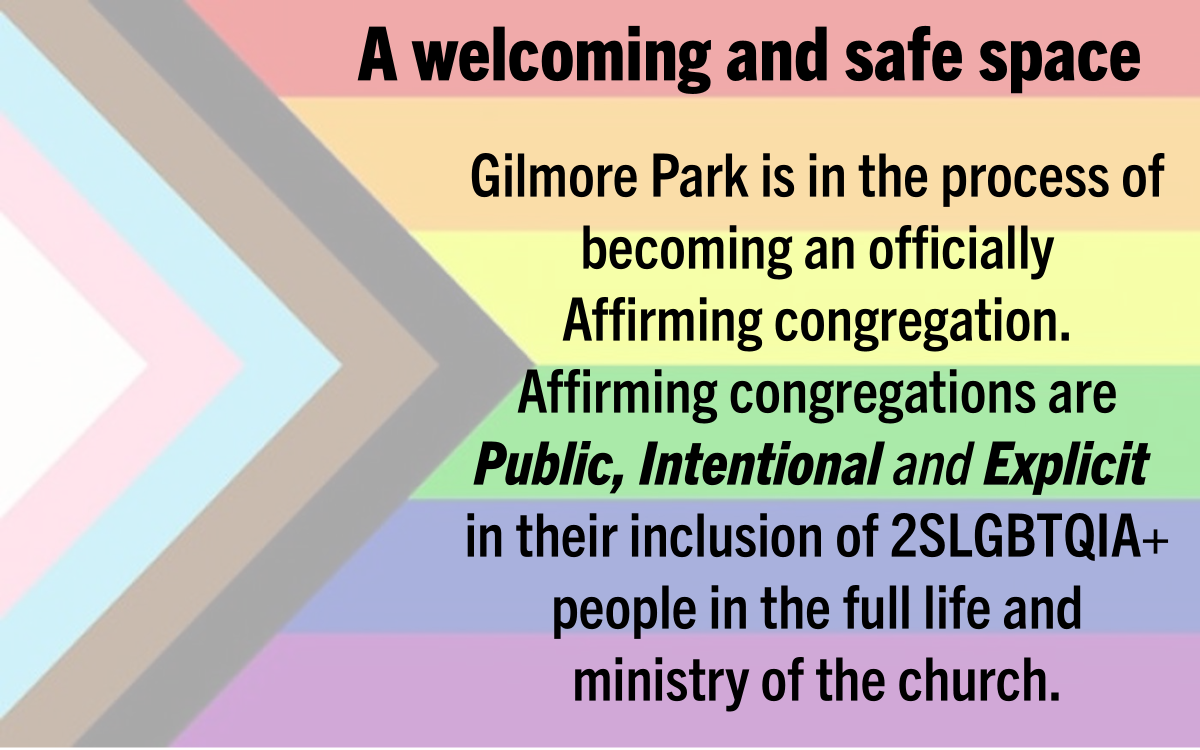
Becoming Affirming
Why become an Affirming Ministry when we’re already welcoming to everyone?
Because: Jesus’ ministry included all who were excluded for any reason. The Gospel calls us to do the same!
Because: We need to be out, public, and proud to be fully present to our communities in all their diversity and struggles.
“Welcoming is a hollow word to many of us. We expect religion to reject us, and so often, across denominations and churches, this is the case. It is hard for us to even fathom the possibility that we could actually be welcome.”
—Transgender member of the United Church“Affirming Ministries acknowledge that God’s love is wider and more inclusive than they can imagine. and they commit themselves to sharing that news with others who may have heard a quite different message about what it means to be church. Because voices of condemnation, exclusion, and hatred are loud and persistent within the church and in society, Affirming Ministries make a public statement about who they are and what they believe. They understand that while it may be risky and challenging to “come out” as an Affirming Ministry, it is often far less dangerous than it is for LGBT people themselves.”
– excerpt from Open Hearts: Resources for Affirming Ministries in The United Church of Canada
Steps to Becoming Affirming
Becoming Affirming isn’t a quick journey, because it’s a process of love, discernment, and transformation. The stories we hear from Affirming ministries often use the words “transformation” and “unexpected”. Expect the unexpected in your process and always expect it to change you.
In order to become an Affirming Ministry, your ministry will work with an educational/discernment process. It’s designed to help you reflect on what it means to be inclusive; it evaluates your ministry’s openness to the ongoing work of being intentional about how it includes others within the life and work of your ministry.
We expect that you will look at a variety of areas that may be barriers to those coming to your community – age, gender, race, ability, class, economic status and, in particular to the Affirming ministry, gender identity and expression, and sexualities. The advice we have received from many Affirming Ministries is that this discussion should include as many groups within your ministry as possible, from your governing body to your staff, choir, adult groups, spirituality groups, youth, children, outreach, and more.
The education and discernment process should include:
a) Hearing personal stories from within your ministry and the community in order to understand the need for this action
b) Hearing about and discussing modern theological understandings of scriptures which for years and still today are used to discriminate.
c) Hearing from Affirming ministries what impact that decision has had on their ministry. Discussing what it might mean for your ministry.
d) Hearing about and discussing the social justice aspects of why becoming Affirming is important.
Public commitments:
Along with the educational and discernment process, becoming an Affirming Ministry includes making three public commitments:
- A Vision Statement concerning the inclusion of people of all gender identities and sexual orientations in the life and work of the ministry.
- A continuing Plan of Action for the Ministry once you’re Affirming
- An Equal Marriage Policy
Since the first day I walked in here, I have been included…this church tells me I am valued. And to be valued is to belong!
- A member of Trinity United, an Affirming Ministry in Vancouver